On a roll: what most people don’t know about painting roller coasters

Painting roller coasters sounds fun because, honestly, it is.
It is not every day you get to work on the kind of structure people plan vacations around, take photos of, and point to from across the park. Coasters are big, bold, iconic, and a little intimidating up close — which is exactly what makes them such a cool canvas.
But roller coaster painting is also full of details most people would never think about.
It is not just picking a color and covering steel. A coaster is a moving, working ride system, and that makes the job a lot more specialized than it looks from the ground.
There are areas you paint, areas you protect, areas you test, and sometimes areas you intentionally leave alone. Every decision has to account for the ride itself, the coating system, the park environment, and the people who will be riding underneath it when the season starts.
Here are a few of the surprising details behind the work.
The Track’s no-paint zone
One of the most interesting details in roller coaster painting is knowing where not to paint.
On many steel coasters, there is a visible worn area on the running rails where the road wheels ride. That wear path shows exactly where the train makes contact with the rail.
That area is not just part of the paint job. It is part of how the ride operates.

Because paint on the running surface can affect friction and ride performance, crews are often directed to stay off that wear path. In many cases, that means holding the coating back approximately 1/4 inch from the visible line.
There are exceptions. On some rides, or in some specific situations, the owner or manufacturer may request that the rail be painted fully if it does not create the same operational concern.
But either way, it is not random.
The decision is intentional, and it is one of those small details that makes coaster painting different from painting a normal steel structure.

One Giant Ride, One Roller at a Time
Yes. A lot of roller coaster painting is done by brush and roller.
Crazy, right?
From the ground, it seems like something that large would obviously be sprayed. But in a park environment, spraying can create major overspray concerns.
Coasters are surrounded by buildings, queue lines, ride vehicles, signs, landscaping, pathways, other attractions, water features, lighting, guest areas, and finished surfaces.
And with the specialized industrial coatings used on steel structures, overspray is not just a little mist that disappears. Many of these coating systems are urethanes or similar high-performance coatings, and those particles can travel much farther than people expect if wind and conditions are not carefully controlled.
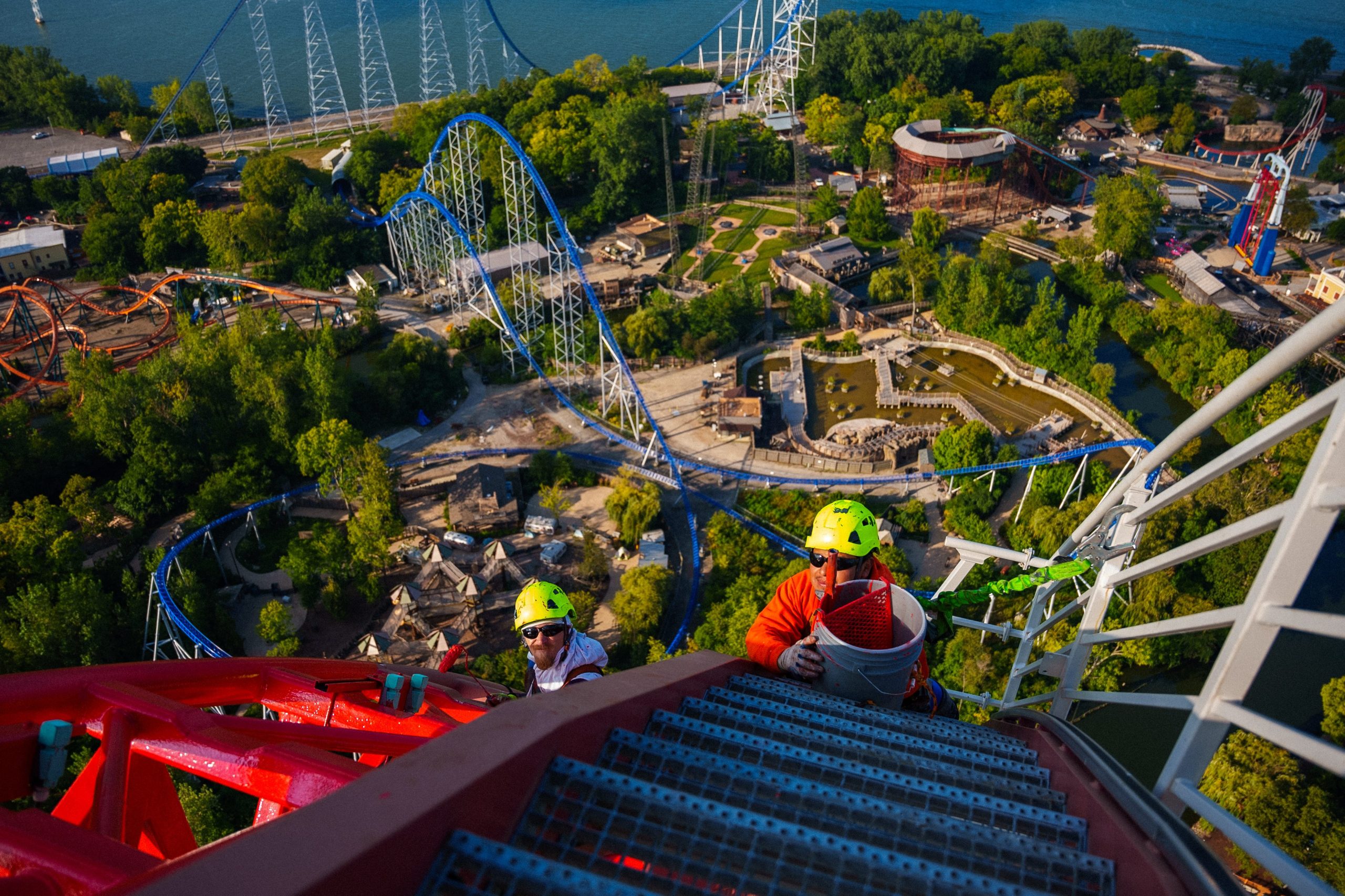
It lets them work around running rails, hardware, catwalks, brake areas, station components, platforms, transitions, and sensitive surroundings without sending coating where it absolutely does not belong.
It is slower. It is more physical. It takes patience.
But there is something pretty awesome about watching a massive coaster come back to life one rolled section at a time.

The Old Paint Gets a Vote
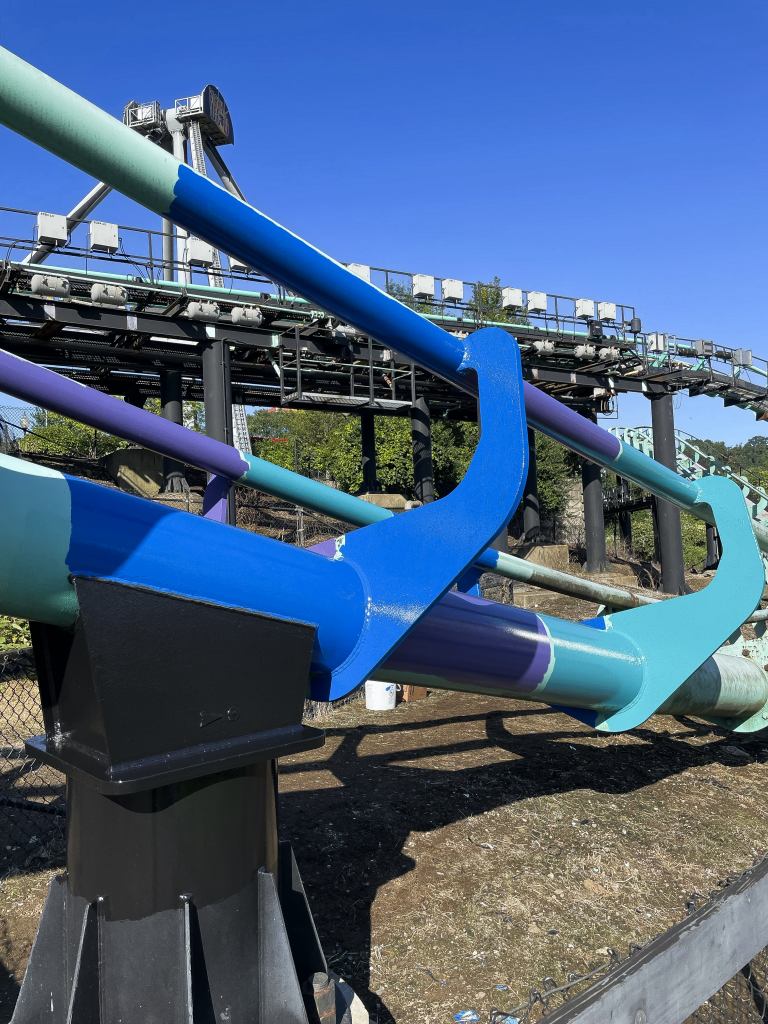
A coaster repaint is not as simple as picking a new color and getting to work.
The coating that is already on the ride matters. What was used before can determine what can be applied next, how the surface needs to be prepared, and whether the new coating system will bond properly. Crews also must consider the ride manufacturer’s requirements, the environment, exposure, and the coating manufacturer’s recommendations.
Even the color change matters.
Not every color covers the same way. A dramatic color change may require additional coats, and on a roller coaster, one more coat does not mean touching up a wall. It means touching the whole structure again.
That is where testing and paint manufacturer support can play a big role. Pull tests, coating evaluations, and technical support help determine what system should be used. Paint OEMs will often help write the specification that applicators follow, so the project starts with the right plan instead of guesswork.
The view is great. The sway is real.

Here is one of the wildest parts of the job: when you are up there painting, you can actually feel the coaster move. Not in a dramatic, something-is-wrong way. In a roller-coasters-are-built-to-move way. From the ground, that idea feels technical. From the lift, basket, or tie-off point, it feels very real.
Eek? Yes.
Also? Pretty awesome.
That is the part people do not think about when they see a freshly painted coaster from the midway. The work is not happening on a flat wall or a quiet building. It is happening in the air, on a ride structure, with a view most people will never get.
That’s the Cool Part
Most paint jobs do not come with an empty midway, a lift in the skyline, or a work truck route past rides, games, and queue lines after hours.
Most paint jobs do not make you think about wheel paths, coating chemistry, wind direction, ride movement, and whether the steel under your boots is swaying just enough to remind you where you are.
But coaster painting does.
It is detailed, technical, physical work — but it is also just plain fun. The kind of work where the setting is unusual, the view is unreal, and the finished result is something thousands of people will see, ride under, photograph, and point to from across the park.
That is the cool part.
It is not just a paint job.
It is a roller coaster.
And getting to bring one back to life?
And honestly?
It is every bit as cool as it sounds.
“Over the past few years we have partnered with Baynum Solutions on everything from rides to slides and Baynum has been up to the challenge. Baynum has been great at helping us through from picking out colors to using the right products for each job the will help with the longevity of the work being done. It has been not only a rewarding task but one that has allowed us to learn and grow with both Baynum and our parks.”
— Jerry Brick | Director of Construction and Maintenance , Palace Entertainment Read more testimonials
Our Partners
Our reputation is built on an uncompromising focus on delivering superior quality workmanship that our clients have relied on for decades.


